All About Black Bears
I Had Questions About Bears
At least one. Last night while lying in bed, I asked my husband a question.
“Listen”,I said “l know what to do when meeting a black bear, but what if I need to use bear spray and the wind is blowing towards me? ”
I had no desire to be blinded by capsicum spray nor be a snack.
I wasn’t really looking for an answer. Nor did I get one.But I decided today to look it up, just to satisfy my curiosity .
I had idly wondered if one should somehow,someway wriggle themselves around so the wind was in a more favorable position – blowing the wind away from my face and my scent towards the bear-that can’t be good, either.
My ‘ source’ Backpacker Magazine states this:
“As for the effects of wind, the team’s modeling showed that firing into headwinds reduced plume distance to 1.5 to 2 metres, crosswinds reduced plume distance to 3 to 3.5 metres, and even the slightest tailwind pushed the plume beyond 10 meters. The team modeled wind speeds up to 10 metres/second. Anticipating questions as to why they did not model higher wind speeds, they noted that most human-bear encounters occur in wind-protected areas, and that bears tend to limit their mobility in high winds due to their impaired sight and smell .”
Good to know. Especially as spring has sprung and the bears and their cute but not cuddly offspring emerge from their long winter’s nap.
This video has good information about using bear spray.
While black bears are abundant in Nova Scotia , there is no need to curtail your outdoor activities if you are careful.
Hiking in Bear Season
- Make yourself familiar with your bear spray, where to carry it, how to use, etc. See video above. (Here’s an aside that’s a bit funny. When I looked on my website to see if I had posted any previous information on bear spray- it took me to “13 Things You Need to Know Before You Date a Hiker“. Make of that what you will.)
- Make sure said bear spray is easily accessible, not stowed at the bottom of your backpack
- Male bears wake from hibernation first, followed by females with their offspring a bit later. This occurs in March/April.
- Black bears are usually most active from dawn to dusk, unless they lose their fear of humans-being food motivated by garbage and easily accessible food is the prime reason.
- Watch for signs of bear activity – tracks, scat, claw marks, hair on tree bark, or overturned rocks and logs.You may notice a skunky type smell-This is due to males leaving their scent during mating season. Unless it’s an actual skunk.
- Avoid areas where bears may frequent – berry patches, rotting animal carcasses and garbage dumps.( I try to limit my time around these places anyway.
- Make noise as you travel through the woods – talk, sing, carry a radio, wear a small bell, or rattle a pebble in an empty tin can.
- Hike with others. Make noise with them.
- Keep dogs leashed. If running loose, they can lead a bear back to you or provoke an attack.
- Pitch tents in a row rather than a circle. That way if a bear wanders into your camp, it will have a clear escape route.
Cooking and Eating
- Store food (and garbage) in your vehicle. Alternately,when camping /eating away from your vehicle- place in plastic bags and suspend the bags at least 4 metres (13 ft) high, between trees which are located 100 metres (328 ft) or more from your camp.
- Cook at least 50 metres (164 ft) away from tents. Wash dishes, storage containers and tin cans immediately. Do not burn food scraps or garbage in your fire pit. They seldom burn completely and may still be an attraction for bears.
- Clothing worn while cooking should be washed, stored in a vehicle, or placed away from your tent.
- Never store, cook, or consume food in your tent.
Meeting a Bear
- It may huff, snap its jaws, or swat the ground to warn you that you are too close.
- If a bear is standing on its hind legs, it is usually trying to get a better scent or view, not acting aggressively
- Do NOT run. This can trigger a chase response
- Avoid eye contact, stay calm,talk in a normal voice.
- Make yourself look big. Gather your group together, hold you backpack over you head
- Make noise like shouting or clapping. Screaming, somehow, was never mentioned.
- Back away slowly, ensure you don’t corner the bear, leave him a way to get away.
- Leave the area if possible
If an attack seems imminent
- Retrieve bear spray from holster and prepare to employ bear spray when the bear is 5 metres away. (About three refrigerators stacked atop one another.)
- In case of an attack, fight back with all your might—do not “play dead” with black bears.Try to strike it in the eyes or on the nose.Use whatever you can-a stick ,rock or fists.
- Do not climb a tree-black bears are excellent climbers
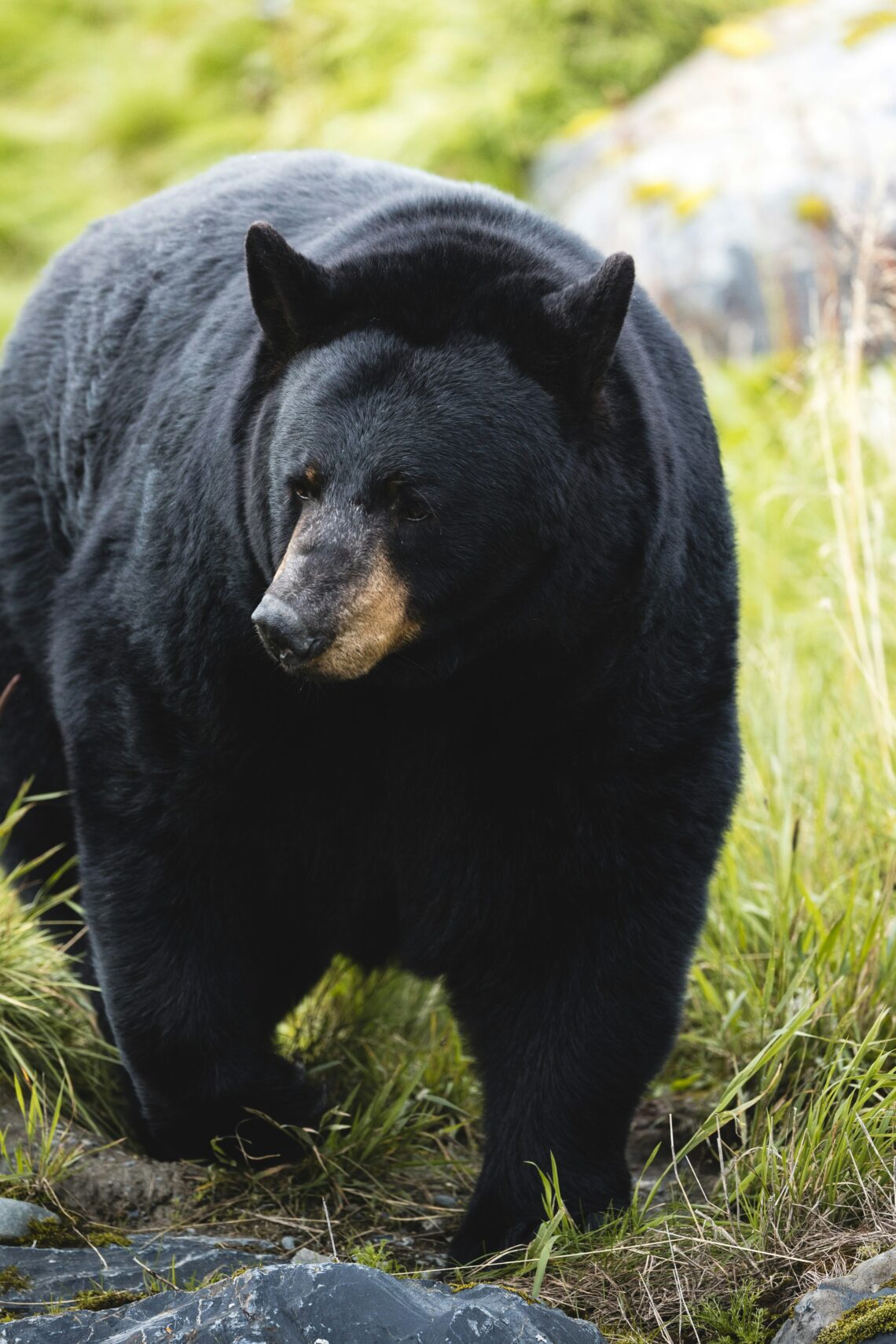
Cover photo Photo by Tomáš Malík on Unsplash
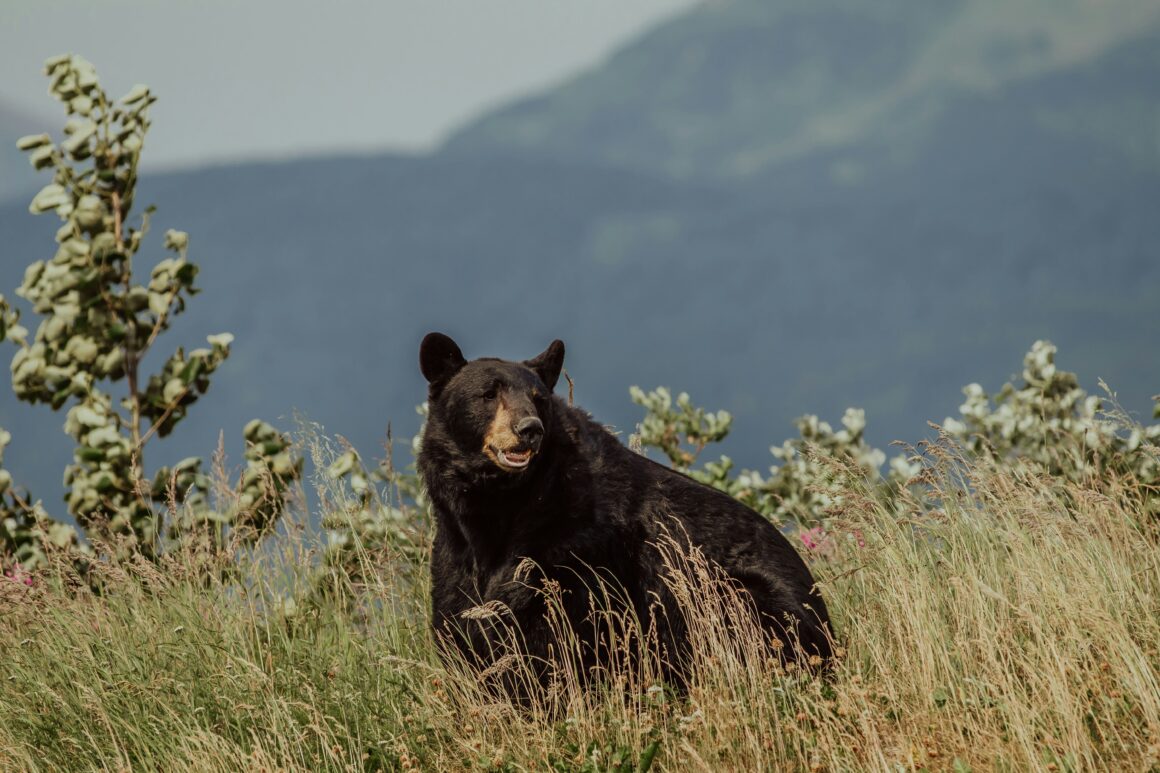
Bear in field Photo by Danika Perkinson on Unsplash